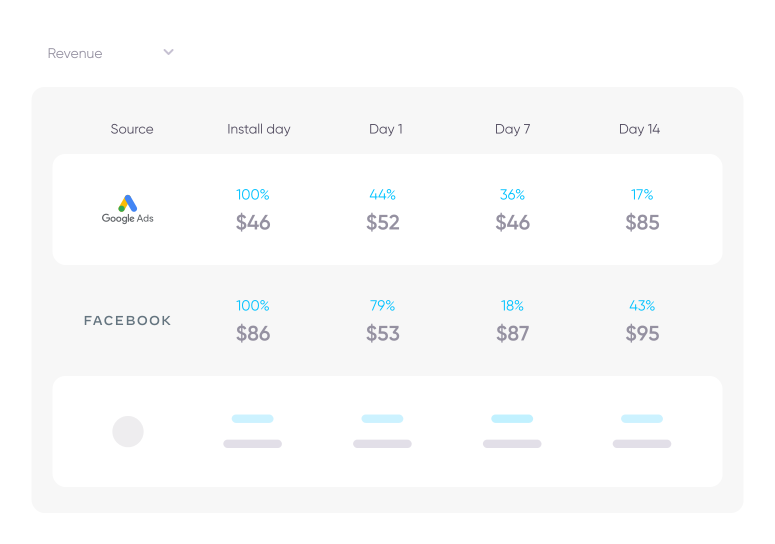
Get a full view of performance with a SKAN solution that provides accurate, granular measurement while keeping you compliant and your customers’ data private
Our open platform provides the measurement, analytics,
engagement, and fraud protection technologies you need to get the answers to all of your questions, and
make good choices for your business and customers.
Bringing in new customers is great. Getting accurate insights while protecting your customers’
privacy is even better. Our privacy-preserving measurement and cost aggregation technologies
give you insights you can count on across channels, platforms, and devices.
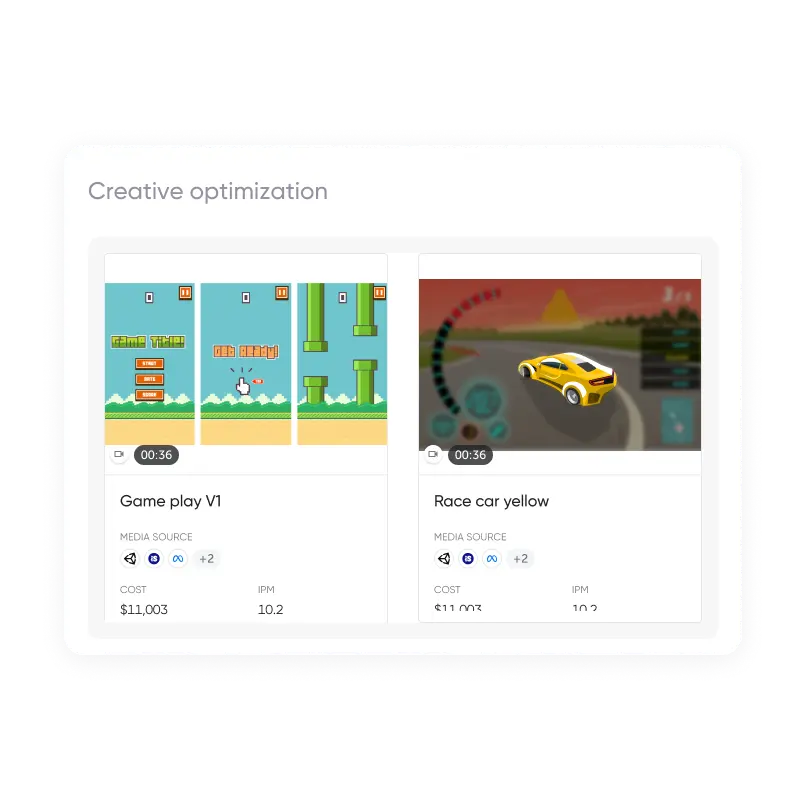
Can you build a winning creative strategy that is based on performance data and AI
insights?
When it comes to building a winning creative formula, leveraging performance data and AI is
crucial. With our AI-powered solution, you can harness the power of data and advanced technology
to create a creative strategy that is supported by reliable performance metrics and valuable
AI-driven insights.
Do you have the tools to turn your insights into actions?
澳洲体彩幸运5官网历史记录查询-澳洲2024幸运五最新查询开奖结果直播-幸运5官网开奖号码历史查询澳洲结果. Not all marketing activities are created equal. Our analytics suite simplifies complex data and
gives you a unified view of campaign performance so you can make better, faster marketing
choices at every stage of the customer journey.
Can you create exceptional experiences that keep customers engaged?
To succeed, you need to meet your customers where they are. Our customer experience and
engagement suite, powered by a reliable deep linking engine, lets you create personalized
journeys that increase conversions and return on experience.
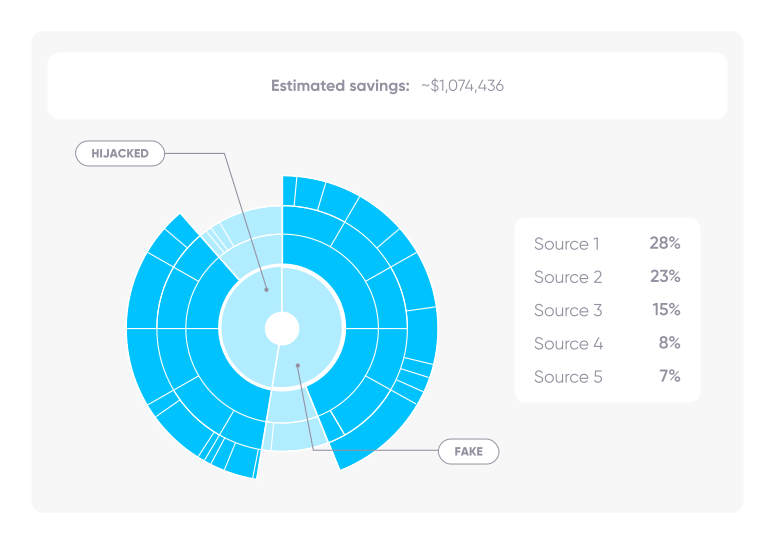
Is your budget safe from mobile ad fraud?
Bots and click farms aren’t going to generate revenue (for you). That’s why you need a
comprehensive fraud protection solution to make sure you’re investing in the right channels, and
only measuring and paying for real actions.
We believe that you can increase customer privacy and provide
exceptional experiences. Our solutions for iOS 14 (and beyond) are turning challenges into new
opportunities – find out how
看澳洲的幸运5历史查询网-2024幸运5官网开奖直播澳洲结果-在线手机版开奖幸运5结果号码. When brands make good choices for their customers by respecting their privacy and providing
exceptional experiences, they create deeper, more rewarding relationships. Here’s how we help you
make that happen:
Start with privacy as a givenPrivacy is a basic human right for everyone, everywhere. That’s why we chose to create a new industry standard for privacy and security to ensure your customers’ data is protected and your business is compliant.
Provide unmatched, trusted insightsThe insights that matter are the ones that you can trust and act on. Our platform gives you the accurate and actionable insights that help you build better customer relationships.
Take a customer-obsessed approachDoing the right thing takes courage. Our independent, unbiased, privacy-first approach allows us to provide exceptional experiences for you, so you can do the same for your customers.
Create technologies that enable innovationThe only constant is change. Our open, flexible platform helps you drive innovation for your customer through privacy-preserving technologies, and a connected ecosystem of partners.